
A card deck is paper, ink, film and packaging. Each of those can be specified for markets with environmental or toy-safety requirements — and each is documented, so your compliance team is not asked to take it on trust.
Green printing is not a single label — it is paper source, ink chemistry and coating choice, decided before the plates are made.
FSC-certified stock available for decks sold into markets where a chain-of-custody claim is expected. The chain-of-custody certificate is held by the factory.
Soy-based and low-migration ink options, specified for products that may be handled by children or used in food-adjacent packaging.
Water-based varnish instead of plastic film where the surface can take it — a thinner coating with less plastic in the finished product.
Proves the paper comes through a certified supply chain; available for your own sustainability reporting.
Toy-safety compliance for card products sold in the EU, including decks aimed at younger users.
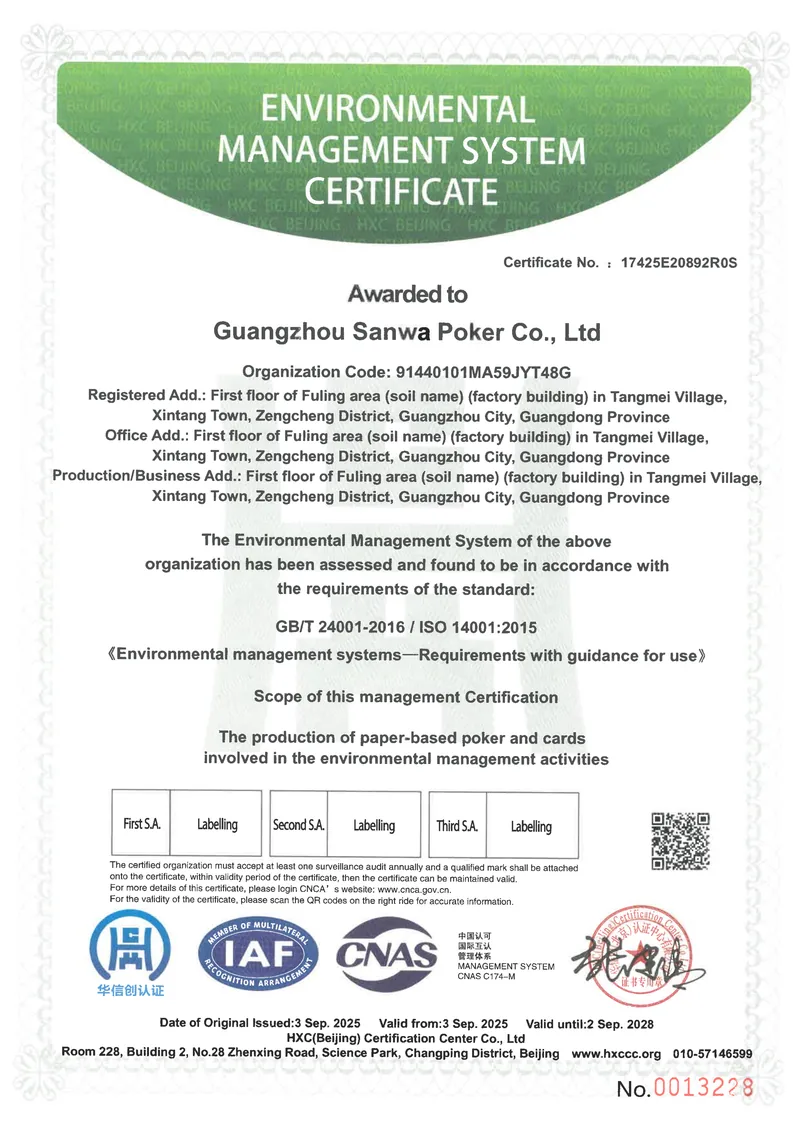
Environmental management system certificate, covering how the factory controls waste, energy and materials.
Send the market you are selling into and the claim you want to make on pack. We reply with the matching certificates and, where relevant, the ink and coating declarations for that specification.
Being straight about the trade-offs is more useful than a page of adjectives. Three that come up most often:
Water-based varnish is thinner and more recyclable, but it does not protect against abrasion like film — heavy casino use still points to lamination.
A paper band removes plastic from the pack but offers less protection in transit; it suits retail cartons rather than single-unit e-commerce.
Recycled board can behave differently in the hand. If shuffle feel is the core of the product, test it in a sample before committing.
Tell us the market and the claim you need — we will quote the material and coating combination that supports it.